
Rossland Court House
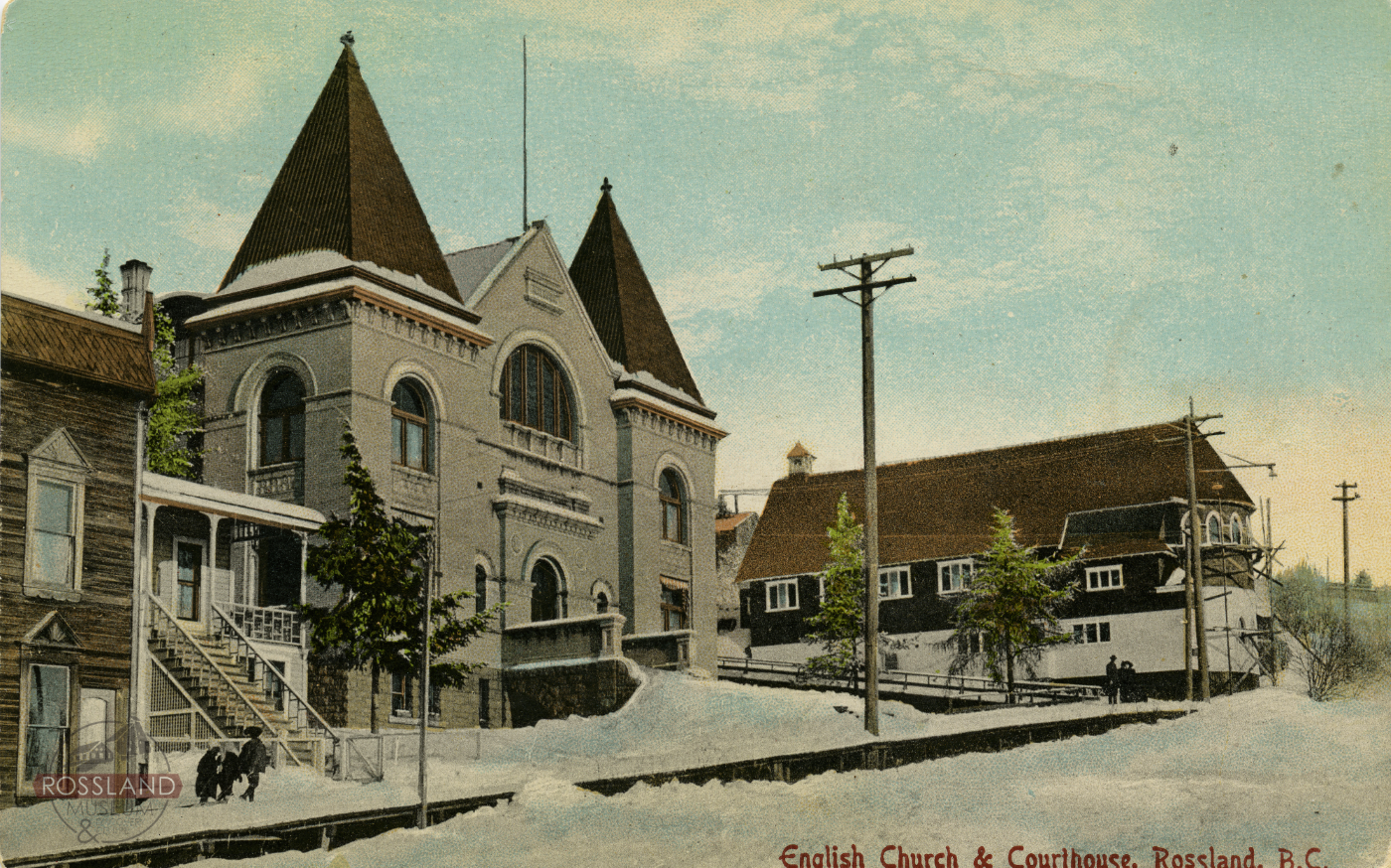
2276.0018: Coloured postcard showing the Rossland Court House and St George’s Church, circa 1914
Historical Name: Court House
Common Name: Rossland Court House
Physical Address: 2288 Columbia Avenue
Dates of Construction: Started in 1898, completed in 1901
Architect: John J. Honeyman. Built by James Lawn and the Provincial Department of Public Works
The Rossland Court House is a designated National Historic Site of Canada.
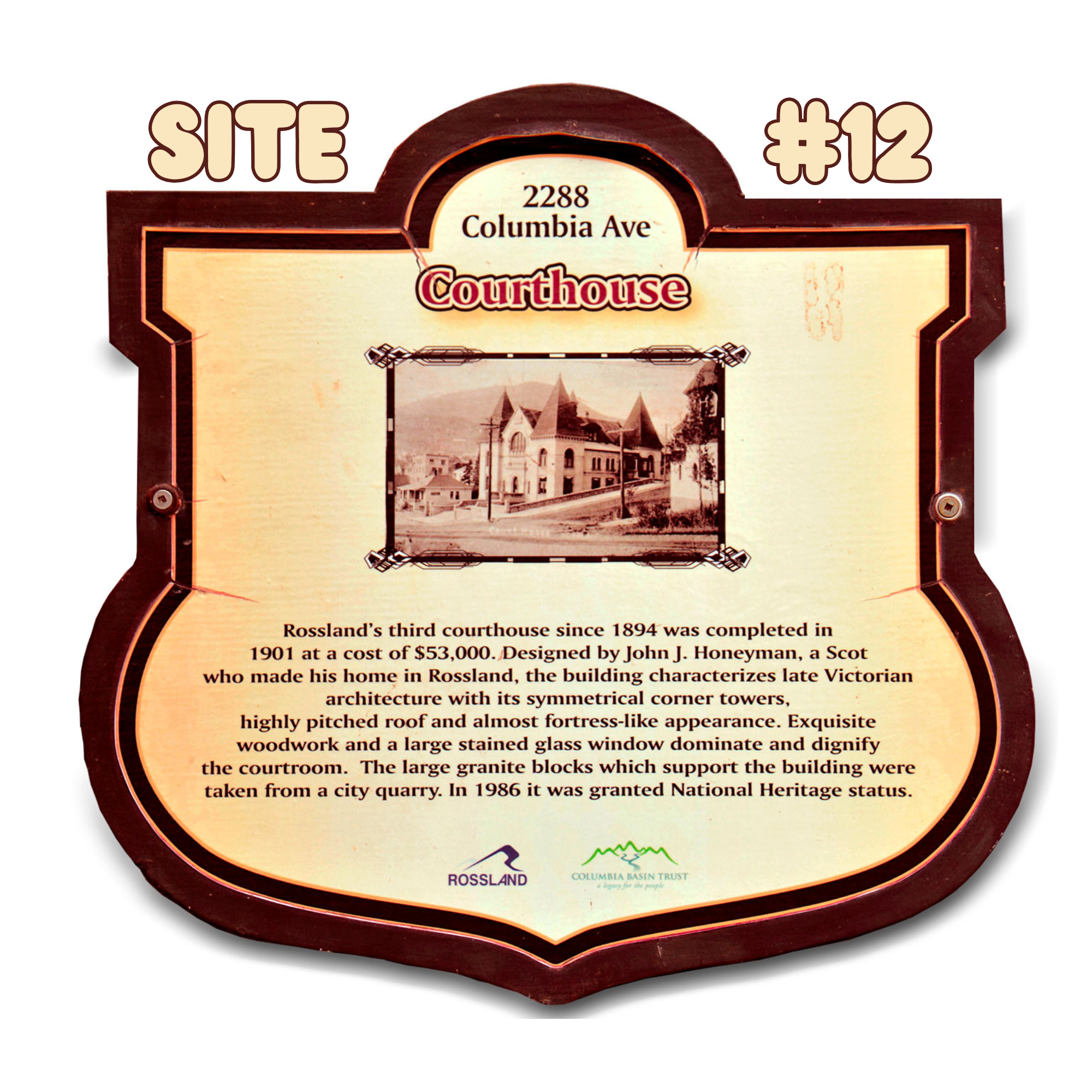
City of Rossland Heritage Register Plaque
History of the Rossland Court House
The building we know today as the Rossland Court House was the third in a series of structures built to maintain law and order in the new town. Rossland’s first court house was built in 1894 from hewn logs on the lot located at 2060 Columbia Ave, the current site of the Alpine Drug Mart pharmacy. It was the second building to be constructed on Ross Thompson’s new townsite, and served for a year as the Provincial Government offices, district recording office, jail, and court house. Harold Kingsmill, writing in 1897, claimed that the early town “contained no gaol constable or other peace officer and none were needed; a fact which speaks in most glowing terms of the character of the men and women who were the pioneers of the now thriving city of Rossland.”
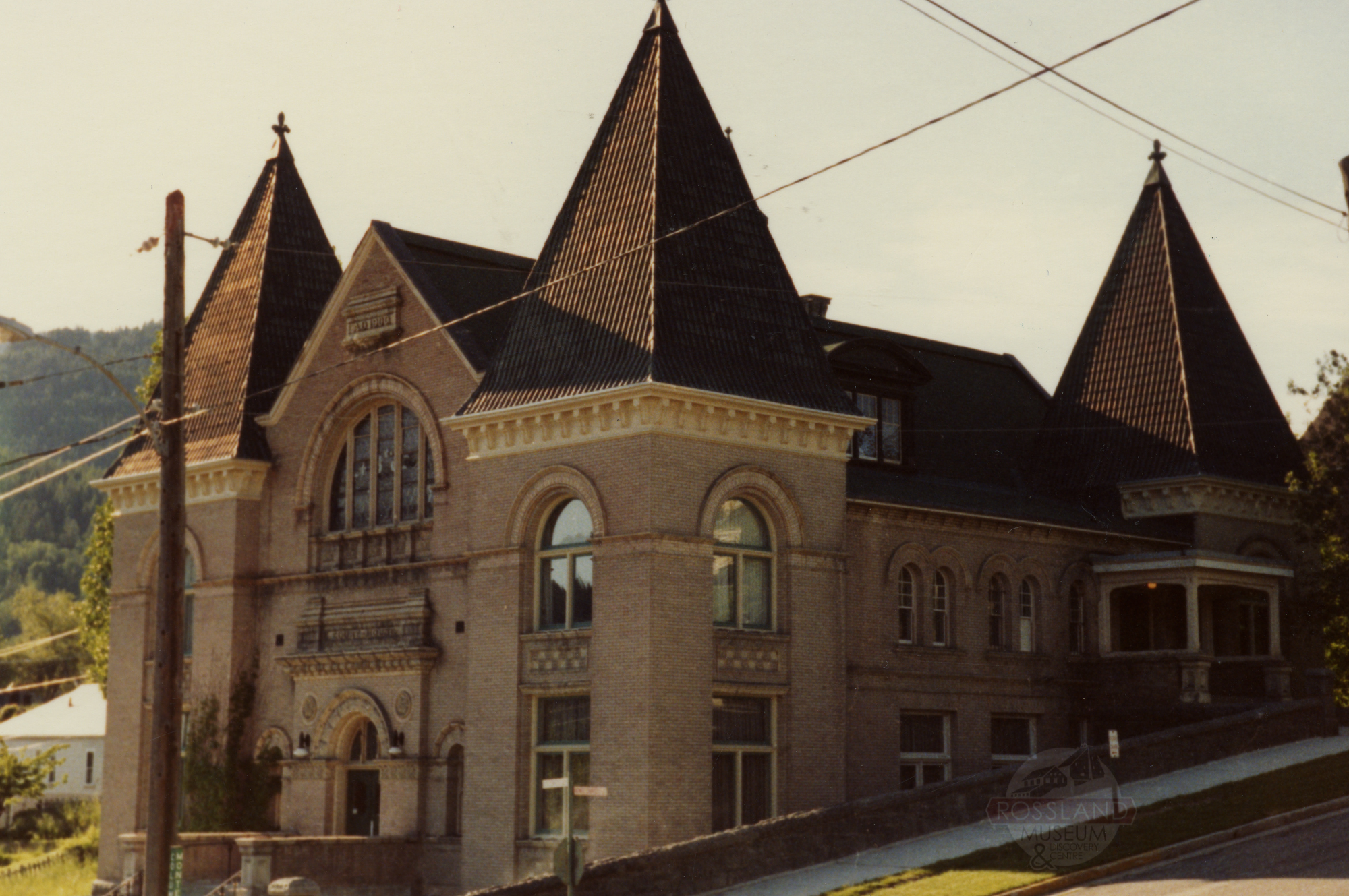
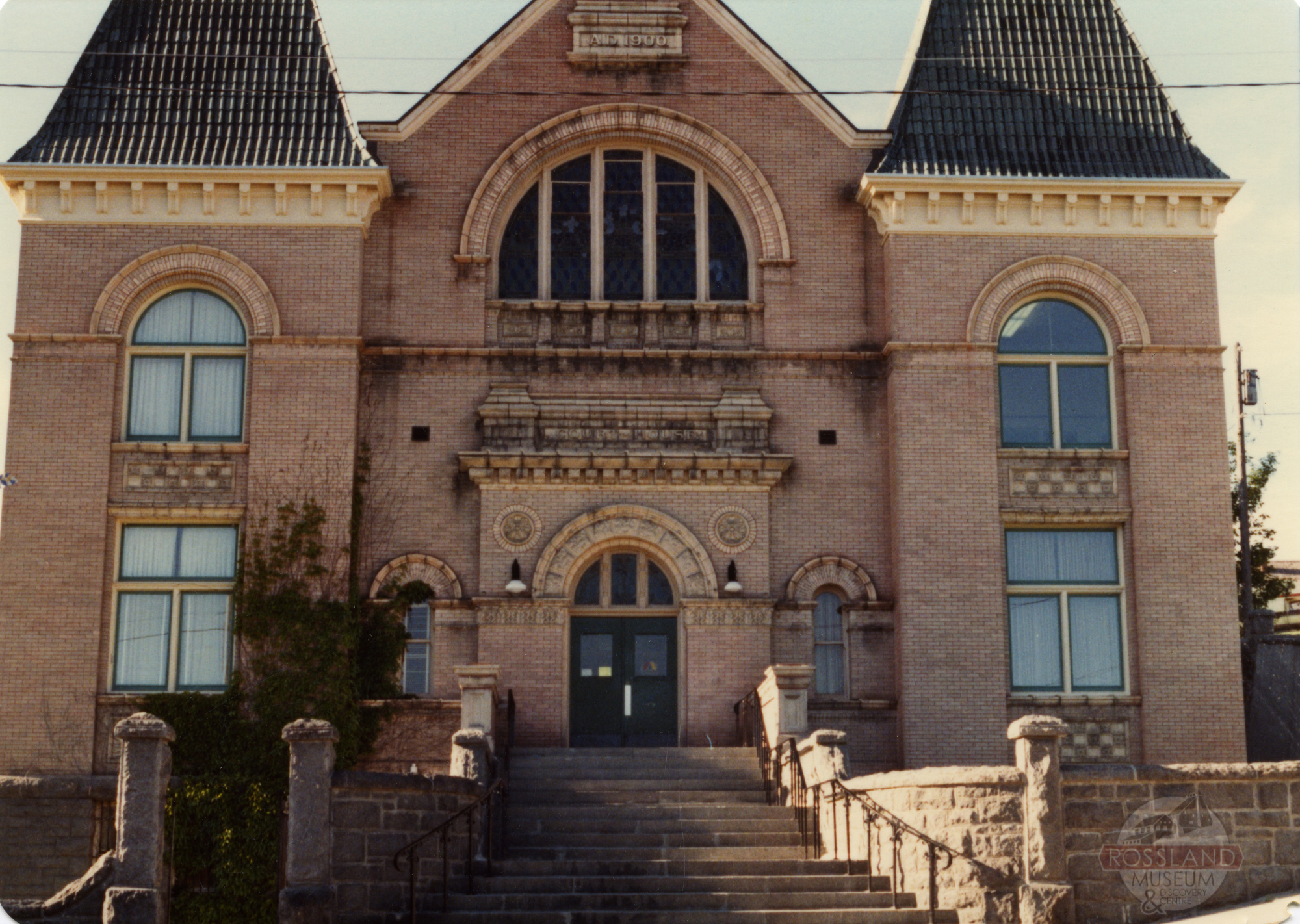
2276.0024: Rossland Court House on the corner of Columbia Avenue & Monte Cristo Street, c.1985
The second court house was located on the north side of Columbia Avenue west of Spokane Street, up against the rock bluff. The court house remained there until Rossland was incorporated in 1897, at which time plans for a larger courthouse to accommodate the growing city were being discussed.
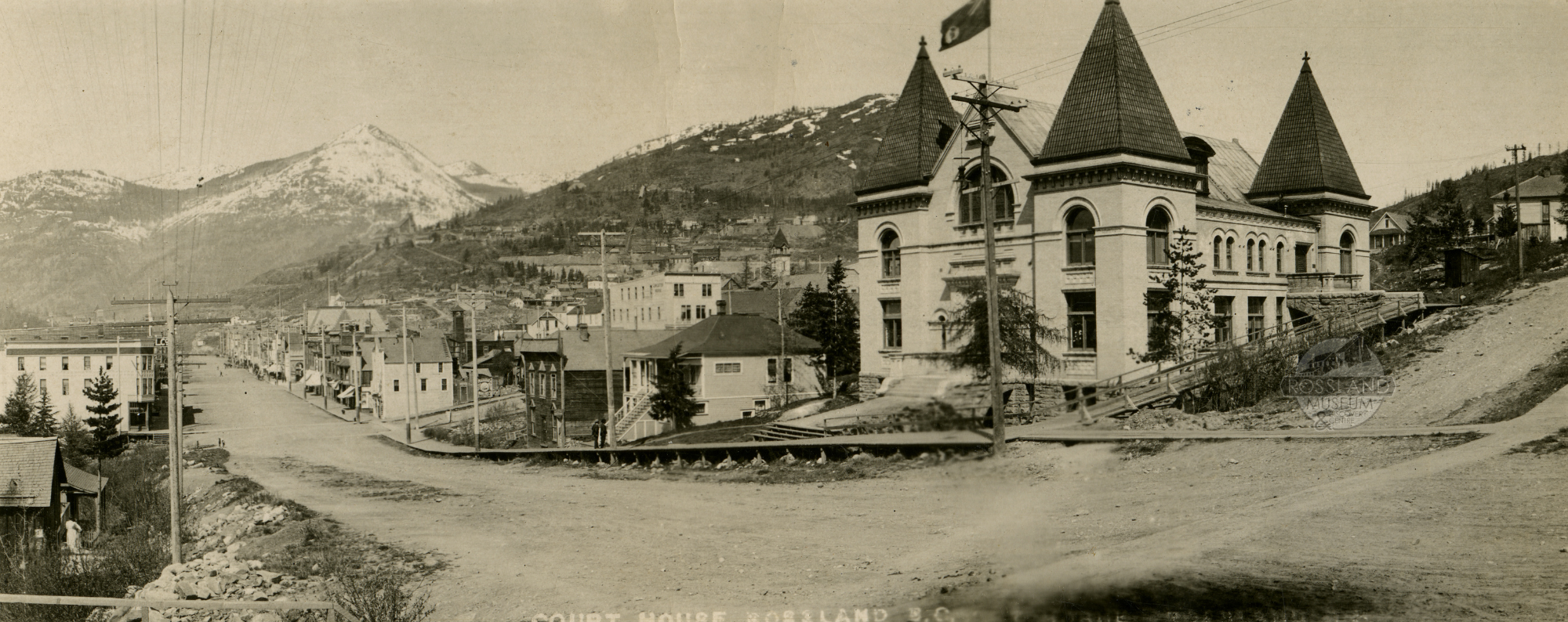
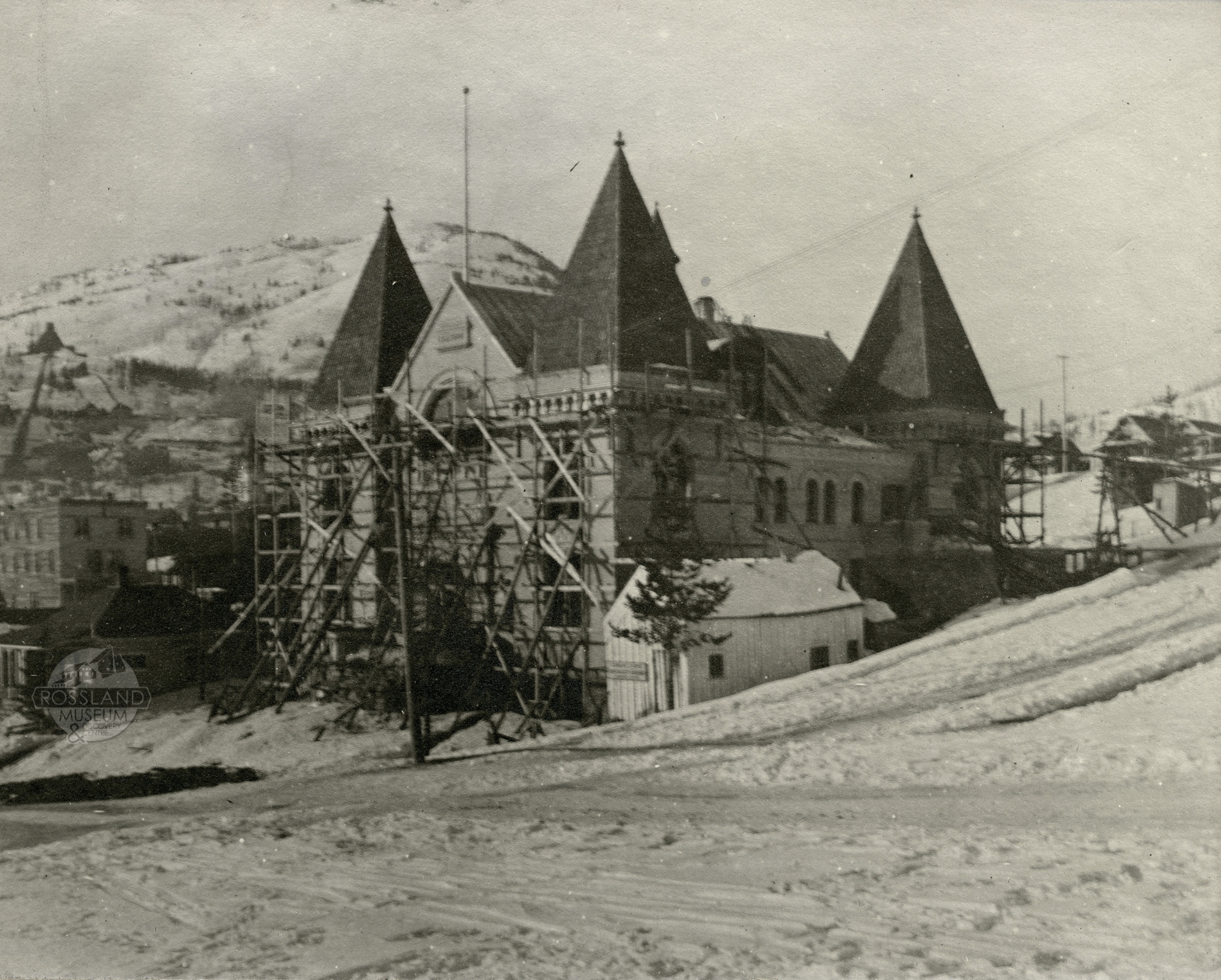
The site finally decided upon was on the corner of Columbia and Monte C(h)risto. Because of the steep incline, it was not an ideal site for building. Despite this fact, the location was chosen and construction began.
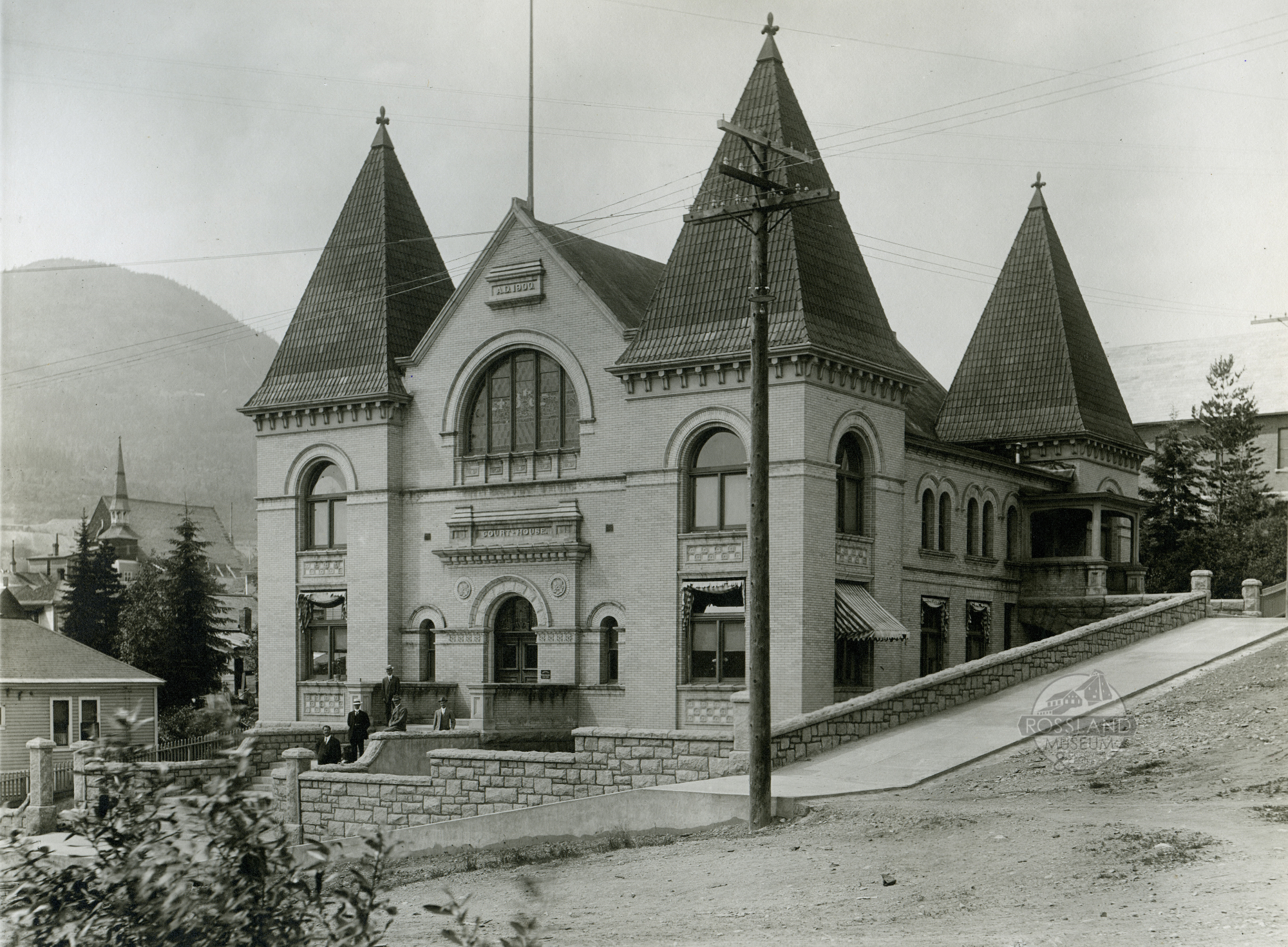
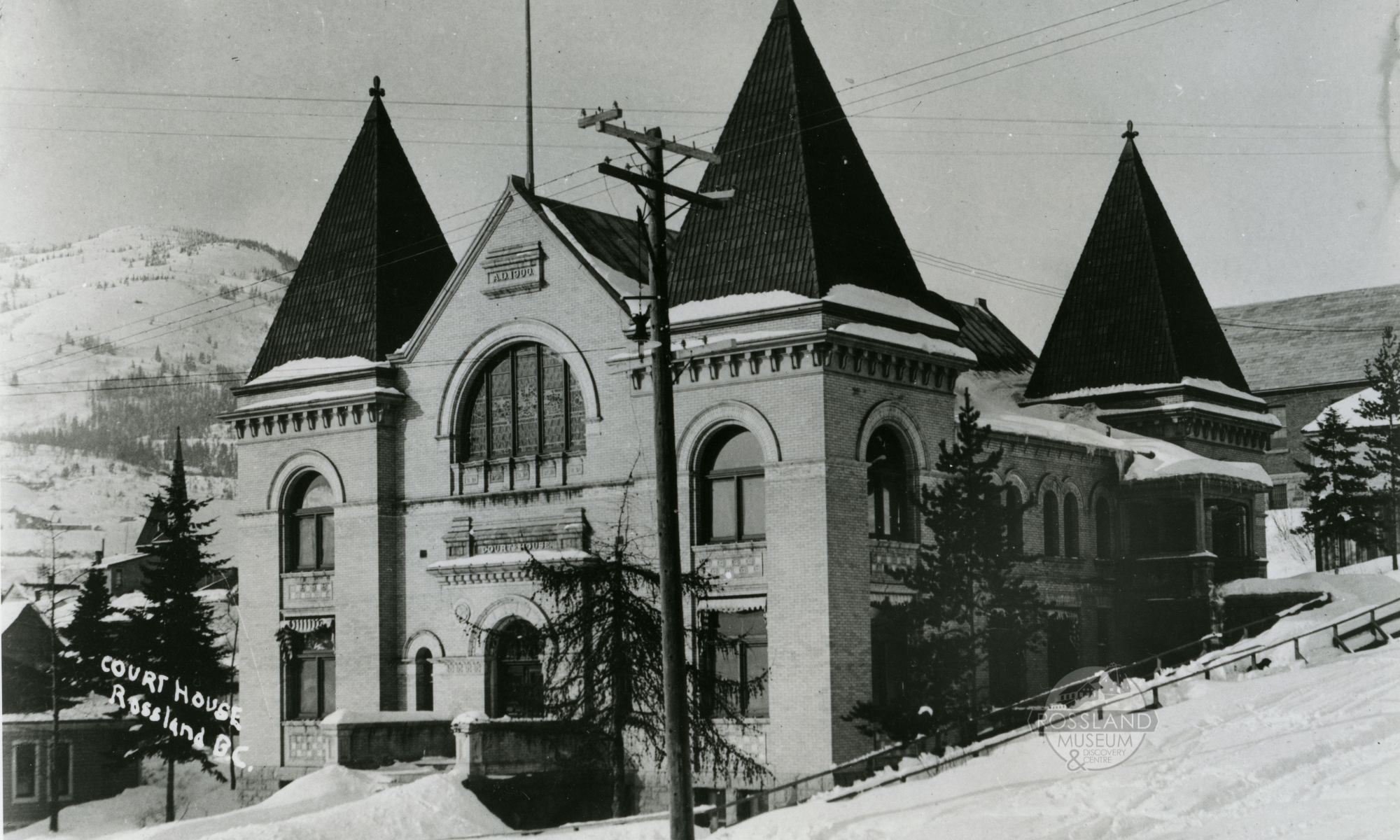
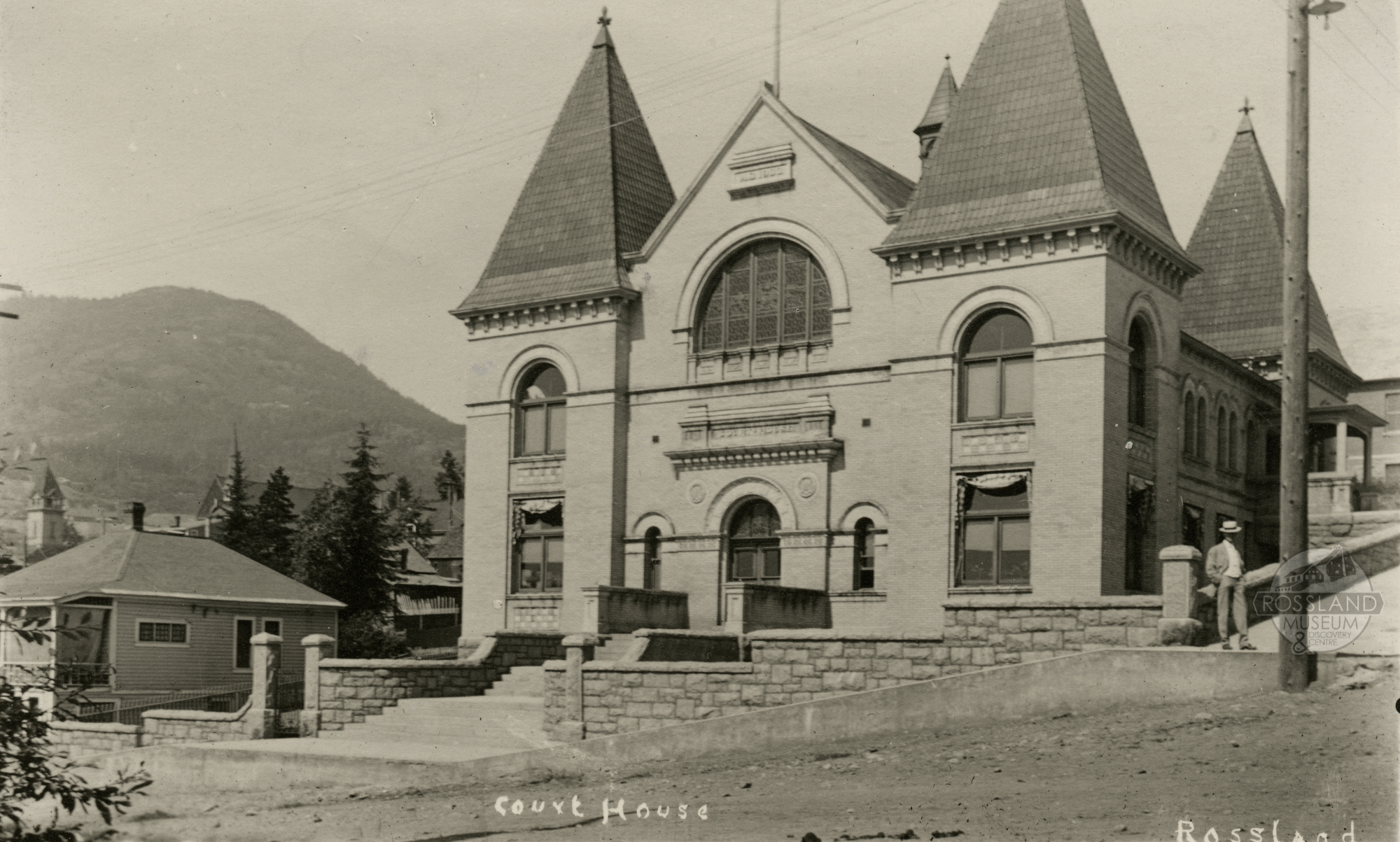
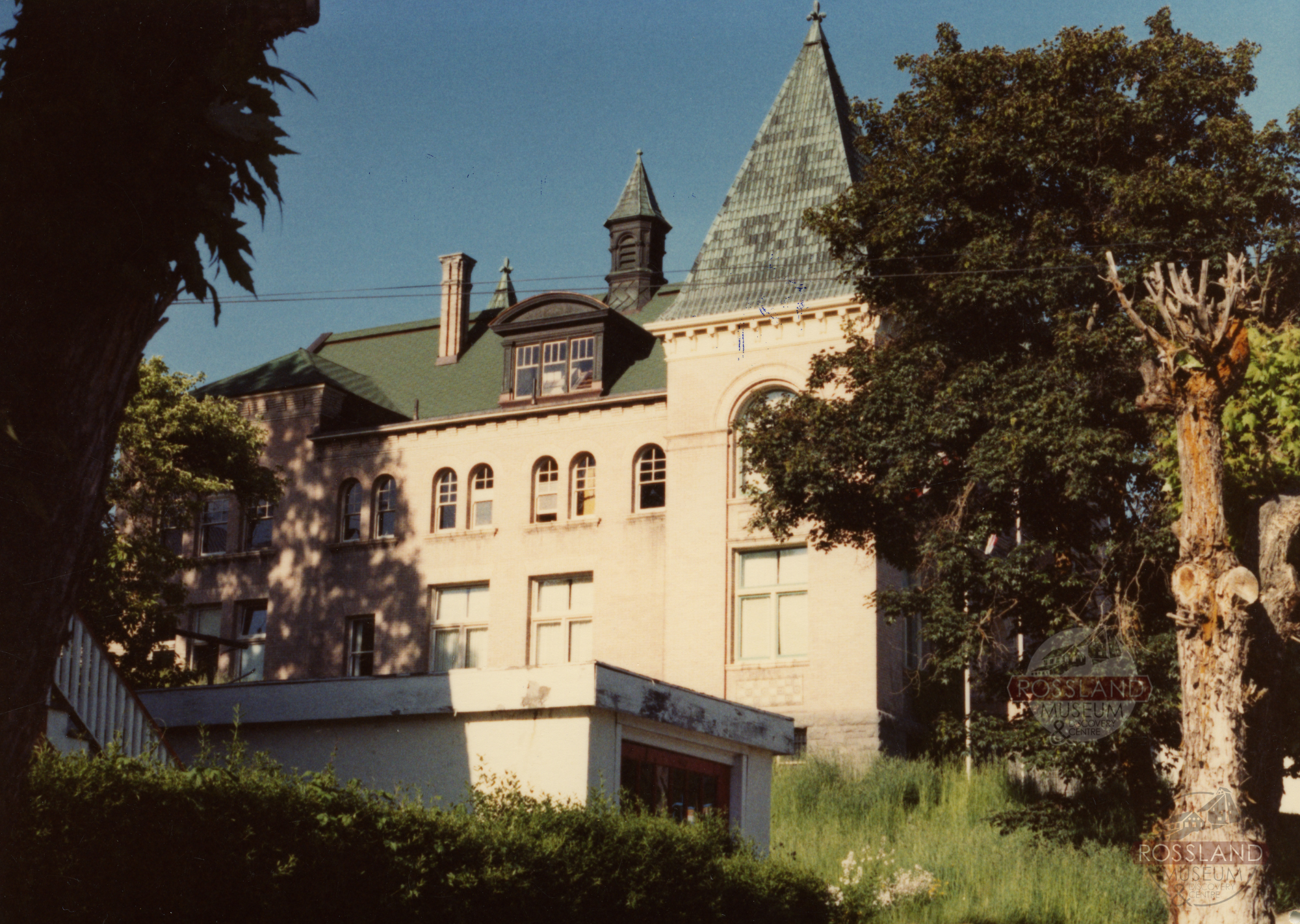
John J. Honeyman, a Scot who made his home in Rossland, was the architect who designed the Rossland Courthouse. Honeyman borrowed a few features from Francis Rattenbury’s Nanaimo Courthouse. The Canadian Inventory of Historic Buildings noted, “the front facades of both are dominated by symmetrical corner towers topped with pyramidal roofs. Honeyman extended this feature by adding an additional tower at the rear of his design, thereby giving a curious fortress-like appearance to the building.”
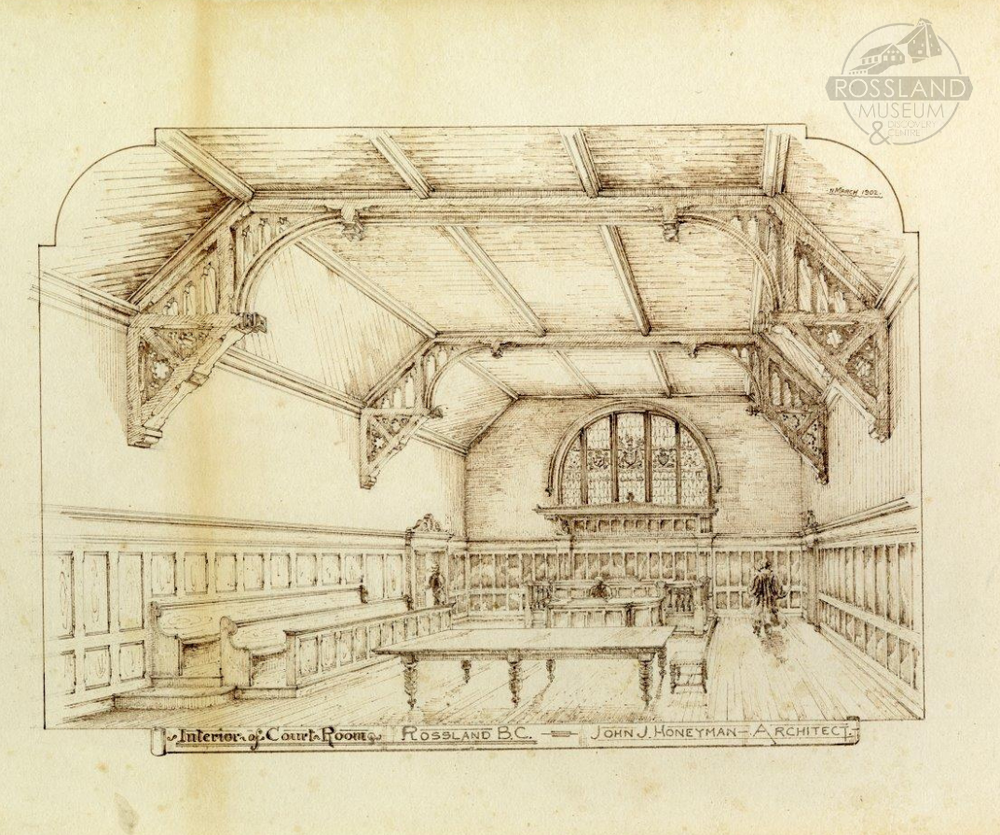
Interior Sketch of the Rossland Court House, 1902. Drawn by Court House architect John J Honeyman
The Rossland Miner reviewed the opening ceremonies in a lengthy article on May 31, 1901. Justice Martin presided over the ceremony, “attired in a crimson robe deeply edged in ermine.” The members of the bar wore conventional wigs and gowns while their wives observed from the jury box. The interior of the Court House was decorated for the grand opening. The citizens of Rossland were pleasantly surprised to find that the carpeted floors held arrangements of palms and other plants.
James Lawn, a local contractor, received the contract to construct the Courthouse, as his low bid of $38,500.00 was accepted. Lawn worked on the building for a period of one year and then quit before completion. The Department of Public Works took over construction after Lawn’s departure. The final cost of the building was $53,000, exceeding projected costs.
The court room is demonstrative of the exquisite woodwork which is found throughout the building. The following excerpt from the Rossland Miner described to the people of Rossland what the court room would look like after its completion:
“[The Court room] is finished with half open timber roof, the hammer beam truss being used with matched cedar laid diagonally and in panels — the roof principals being filled in with simple tracery in cedar. The heavy square moulded balusters in front of the public gallery, the high wainscot in panelled cedar with surmounting cornice carried to the height of the doors, the heavy scroll work over the doors, remind one somewhat of Tudor or Elizabethan days and harmonize with the solemnity and dignity of a court of justice.”
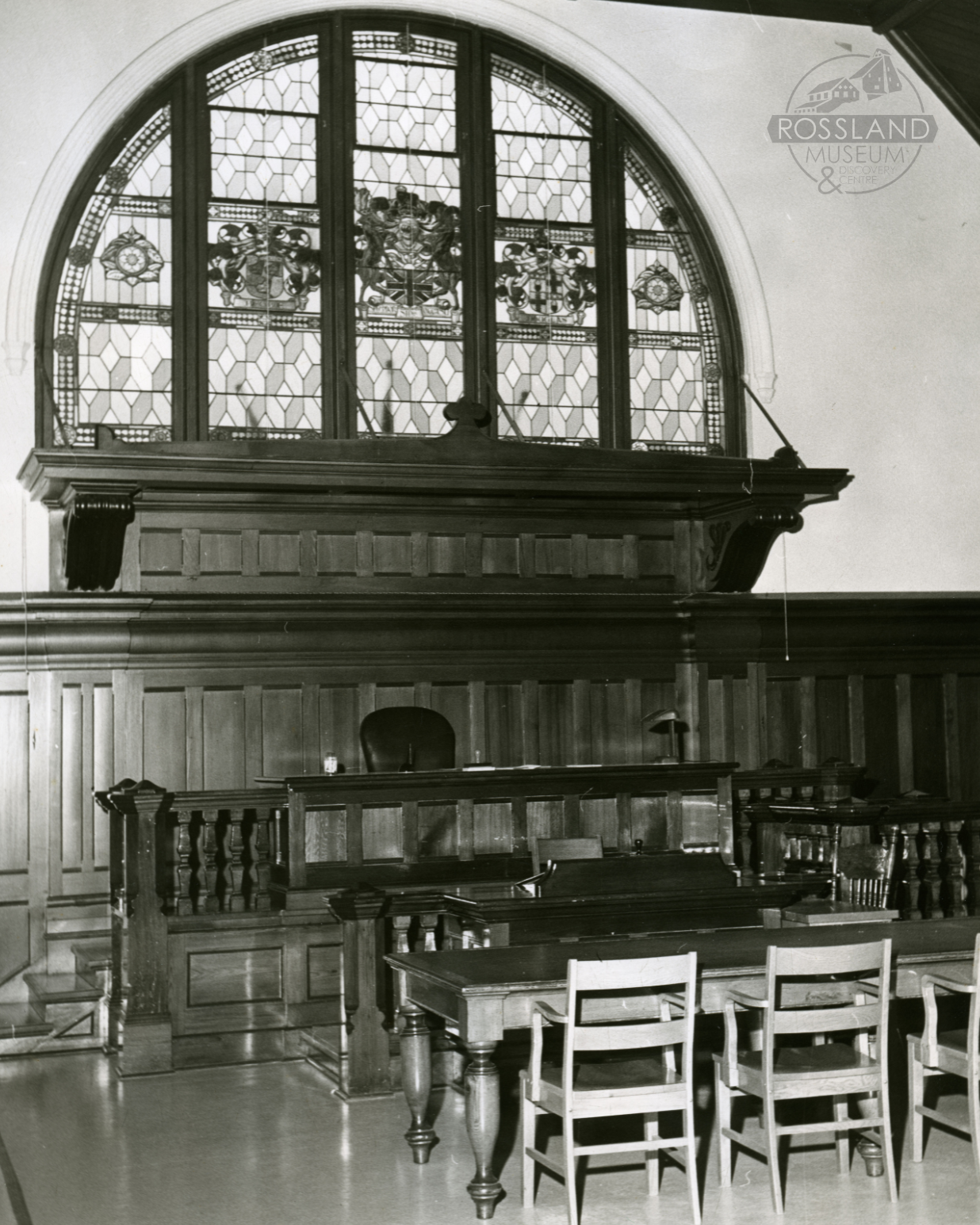
2276.0003 Interior of the Rossland Court House, 1967
The court room has been preserved and has escaped the “modernization” inflicted upon many heritage buildings.
The most impressive attraction to the courtroom is the 9’ x 15’ stained glass window. The Miner also offered a detailed description of the stained glass window:
“In the central compartment are the arms of British Columbia which are guarded by a caribou and a mountain sheep. The centre of the shield is occupied by the Union Jack, over which is the rising sun. This is surmounted by a coronetted helmet over which is a crowned lion. Below is the scroll “Splendor Sine Ossasu.” Flanking this blazon are the arms of Matthew Bailey Begbie, the first Chief Justice of British Columbia, and of Sir James Douglas. The whole will be rendered in colour and with the mid-day sun shining through, should look particularly well over the canopied seat of justice.”
The first floor of the Court House held the Provincial Government offices, including the Government Agent’s office. In the 1930’s, part of the first floor was set aside for a Government Liquor Store. The basement, previously used as a jail, housed Rossland’s library for many years until 1984, when the new library was completed. It also held the Rossland Museum from 1954 to 1967, when the current Museum structure was built! The second floor is where the courtroom is situated, flanked on either side by Judge’s Chambers, Barristers’ room, Law Library, a smaller courtroom, and the Sheriff’s office.
For More Information:
Canada’s Historic Places - Rossland Court House
Contribute your own memories/experiences of the Rossland Court House:
The form below will email us your message. If you prefer to speak to us directly or have other questions or comments about this page, please call (250) 362-7722 or email the archives directly at archives@rosslandmuseum.ca